
At a glance
- Bare steel trays wear quickly under abrasive and high-impact loads, leading to unplanned repairs and avoidable downtime.
- UHMWPE liners provide predictable wear behaviour, cleaner unloading, and lower tipping effort, supporting more consistent maintenance costs.
- Planned liner installation improves visibility over wear patterns and reduces the reactive maintenance that disrupts fleet schedules.
Fleet managers operate within tight schedules and maintenance cycles where unplanned repairs quickly disrupt budgets. Bare steel trays and rigid truck bodies wear faster under abrasive loads, leading to unexpected maintenance that is harder to forecast.
Ultra-High Molecular Weight Polyethylene (UHMWPE) liners change that dynamic by introducing predictable wear, reducing mechanical strain, and lowering stress on the truck body. When truck bed liners are planned as part of the maintenance budget, rather than installed after damage, fleets gain more consistent operating costs and longer, more reliable service life.
This article outlines why UHMWPE liners should be included in asset maintenance planning.
Extend the Life of the Vehicle Body
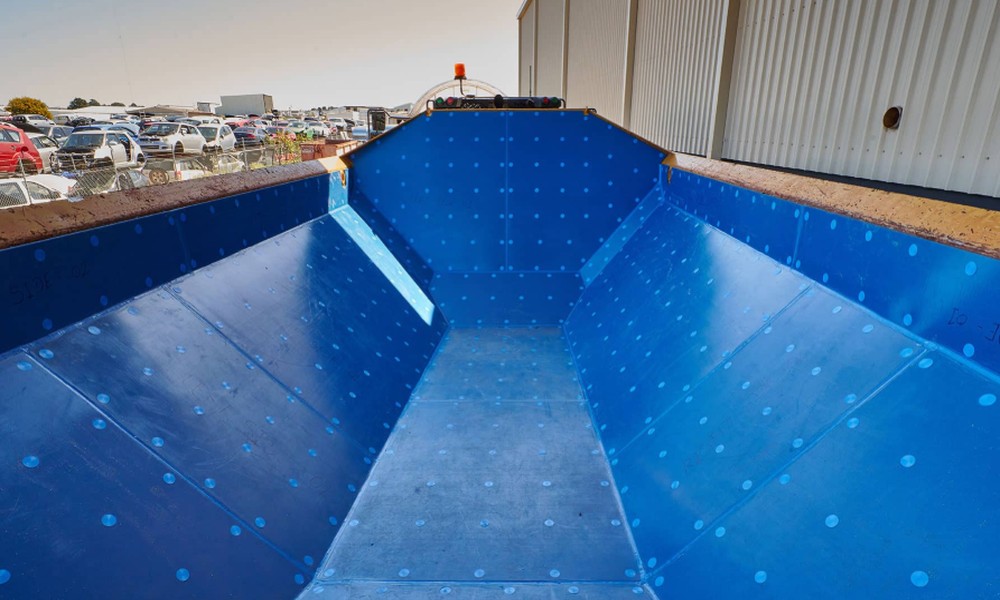
UHMWPE liners form a tough, abrasion-resistant barrier between the load and the steel tray, reducing wear, surface fatigue, corrosion, and the impact damage that weakens rigid truck beds over time. Abrasive aggregates, demolition scrap, and cohesive materials slide across the low-friction liner instead of cutting into the steel, slowing deterioration and delaying resurfacing or tray refurbishment.
A protected tray also provides a clearer picture of the asset lifecycle. When wear follows a predictable pattern, major repairs can be planned, rebuild intervals become easier to forecast, and replacement can be scheduled with confidence. This stability supports more accurate maintenance budgeting and reduces unexpected variability in repair costs.
Reduce Long-Term Operating Costs
UHMWPE liners require an upfront investment but reduce operating costs throughout the vehicle’s service life. Bare steel trays deteriorate quickly under abrasive or high-impact loads, leading to frequent welding, patching, and unplanned repairs. By preventing direct contact between the load and the steel, liners reduce the frequency and severity of repairs and minimise long-term maintenance costs for the truck body.
Operators also see reduced operational costs. Due to UHMWPE’s low-friction surface, loads clear with less resistance, reducing the labour required for manual clean-outs. Faster tipping reduces hydraulic strain on the tippers, lowering the likelihood of failures that take vehicles out of rotation. When these savings accumulate across fleets, the Total Cost of Ownership (TCO) improves, and long-term operating costs become easier to forecast and manage.
Prevent Rollover Risk During Tipping
Sticky or cohesive loads resist sliding off and require higher tipping angles to unload. This increases rollover risks and places additional stress on the hydraulics. UHMWPE liners help material release at lower angles by reducing friction inside the tray, which lowers operational risk and reduces unnecessary mechanical load during tipping.
When loads clear more smoothly, fleets avoid the tipping instability that can trigger unplanned inspections, operational rescheduling, and additional mechanical checks. Preventing these interruptions supports steadier maintenance planning and keeps more repair activity within scheduled service windows rather than reactive, short-notice spending.
Avoid Unplanned Repairs
Bare steel trays wear quickly under abrasive aggregates, scrap metal, and high-impact loads. Dents, cracks, and gouges develop without warning and force reactive repairs that disrupt maintenance schedules. These unplanned events shift maintenance budget to reactive, short-notice repairs and take vehicles out of rotation during periods when availability is most critical.
UHMWPE liners prevent much of this wear and impact damage by adding a low-friction, wear-resistant surface between the load and the steel. Material moves across the liner rather than striking the tray directly, which slows wear and keeps repair requirements predictable. When repairs occur during planned service windows instead of unplanned failures, fleets move from reactive to scheduled maintenance.
UHMWPE liners offer a practical way to plan fleet maintenance. They slow tray wear, reduce unplanned repair events, lower strain during unloading, and keep tipping angles lower, each of which contributes to steadier maintenance cycles during the vehicle’s life. When liners are included as a planned investment rather than fitted reactively after damage, fleets gain clearer visibility over the asset lifecycle and more predictable maintenance spending.
Material quality directly affects that outcome. Premium-grade UHMWPE liners, such as OKUSLIDE®, deliver the wear resistance, impact strength, and consistency required for demanding haulage environments. For operators aiming to improve reliability and maintain tighter control over maintenance budgets, high-performance liners deserve consideration in routine asset maintenance planning.