
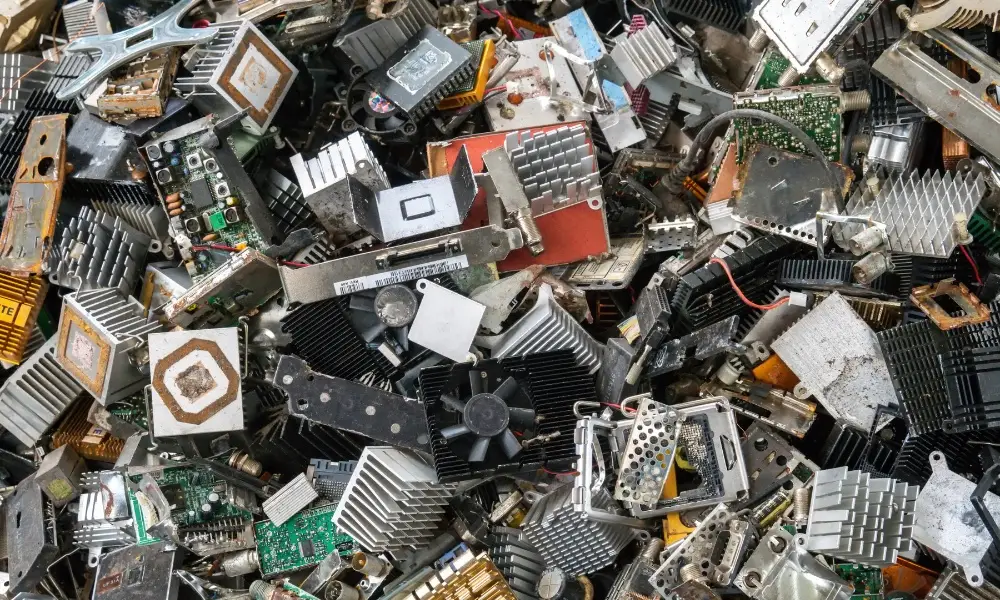

Records from Singapore’s National Environment Agency show a persistent gap between the volume of electronic waste generated annually and the quantity entering proper recycling channels, and closing this gap through accessible e-waste recycle solutions has become a priority as the city-state confronts limits on its waste disposal capacity. Documents obtained through information requests reveal that whilst Singapore has established regulatory frameworks and licensed processing facilities, participation rates among households and businesses remain below targets set in the Zero Waste Masterplan. Interviews with recyclers, government officials, and waste management experts suggest that the problem lies not in lack of infrastructure but in the friction between knowing proper disposal matters and actually taking the steps required to make it happen.
Mapping the Collection Network
Investigation into Singapore’s e-waste collection system reveals a network more extensive than most residents realise. The National Environment Agency maintains a public database listing 438 collection points across the island, including community centres, retail outlets, and dedicated recycling facilities. Major electronics retailers including Best Denki, Challenger, and Courts participate in take-back programmes that allow consumers to return old equipment when purchasing new devices.
Yet awareness remains limited. A survey conducted by Zero Waste SG in 2023 found that only 37 per cent of respondents could identify a nearby e-waste recycle collection point without assistance. The remainder either did not know where to dispose of electronics properly or believed incorrectly that standard recycling bins accepted such items.
The collection network’s effectiveness also varies by location. Residential areas in the city centre and established housing estates generally have convenient access to multiple drop-off points. Newer developments and industrial zones show sparser coverage. For residents without personal transport, travelling to collection points with bulky items like monitors or desktop computers presents practical obstacles that often result in deferred disposal or improper discarding.
What Happens After Collection
Following materials from collection points through the recycling process reveals both sophisticated operations and concerning gaps. Licensed facilities operated by companies including Cimelia Resource Recovery, TES Singapore, and Alba E-Waste Smart Recycling receive materials from authorised collectors. These operations maintain detailed records tracking incoming equipment by type and weight, with documentation required under environmental regulations.
The processing follows systematic sequences:
- Initial assessment determines which devices retain sufficient value for refurbishment, extending functional life whilst providing affordable equipment to schools, charities, and lower-income households
- Data-bearing devices undergo certified destruction, with hard drives physically shredded or degaussed to meet security standards, followed by documentation certifying data elimination
- Hazardous components including batteries, mercury-containing backlights, and certain capacitors receive separation for specialised handling by facilities equipped to process toxic materials safely
- Remaining equipment enters dismantling lines where workers remove circuit boards, extract bulk metals, and separate plastics by polymer type using optical sorting technology
- Circuit boards proceed to smelters or hydrometallurgical facilities where precious metal recovery processes extract gold, silver, palladium, and copper with efficiencies exceeding 90 per cent
Audits conducted by the National Environment Agency verify that licensed facilities meet processing standards, but enforcement varies. Facility inspections occur annually for major operators, less frequently for smaller licensees. Violations documented in agency records typically involve inadequate record-keeping rather than serious environmental breaches, suggesting regulatory frameworks function reasonably well for operations within the formal system.
The Informal Channel Problem
The more troubling findings emerge when tracking materials that exit Singapore through less regulated pathways. Customs data shows exports of used electronics to Malaysia, Indonesia, and other Southeast Asian nations totalling thousands of tonnes annually. Some shipments represent legitimate trade in working equipment, but interviews with regional recyclers and examination of import manifests suggest significant quantities consist of non-functional devices.
One Malaysian recycler, speaking on condition of anonymity, described receiving containers from Singapore where 60 to 70 per cent of equipment proved broken or obsolete beyond economical repair. The functional items get resold. The remainder enters informal processing operations where workers dismantle devices without environmental controls, recovering valuable components whilst dumping plastics and other low-value materials.
Singapore’s regulations prohibit export of hazardous e-waste without proper documentation, but enforcement proves difficult when exporters classify shipments as working equipment. The economic incentives remain strong. Shipping obsolete electronics to neighbouring countries costs considerably less than processing through licensed domestic facilities.
Business Sector Challenges
Corporate e-waste represents a substantial portion of Singapore’s total generation, yet proper disposal faces particular obstacles. IT managers interviewed for this investigation consistently cited data security as the primary concern preventing prompt equipment disposal. Organisations often retain obsolete computers and servers in storage for years rather than risk data breaches through improper handling.
Licensed recyclers offer certified data destruction services, but awareness varies. Smaller businesses frequently lack dedicated IT staff familiar with proper disposal procedures. When companies do engage recyclers, procurement departments sometimes select vendors based primarily on cost without verifying certifications or processing methods.
Industry associations including the Singapore Computer Society have advocated for clearer guidelines and possibly mandatory certification for corporate e-waste disposal, but such measures have not advanced beyond discussion stages.
Making Participation Easier
The path to higher participation rates appears straightforward in principle: increase convenience, improve awareness, and eliminate obstacles that lead to improper disposal. The National Environment Agency has expanded collection points and launched public education campaigns. Whether these measures prove sufficient to close the gap between waste generation and proper e-waste recycle depends ultimately on converting knowledge into action, transforming abstract environmental concern into concrete behaviour change that makes responsible disposal the default rather than the exception.

