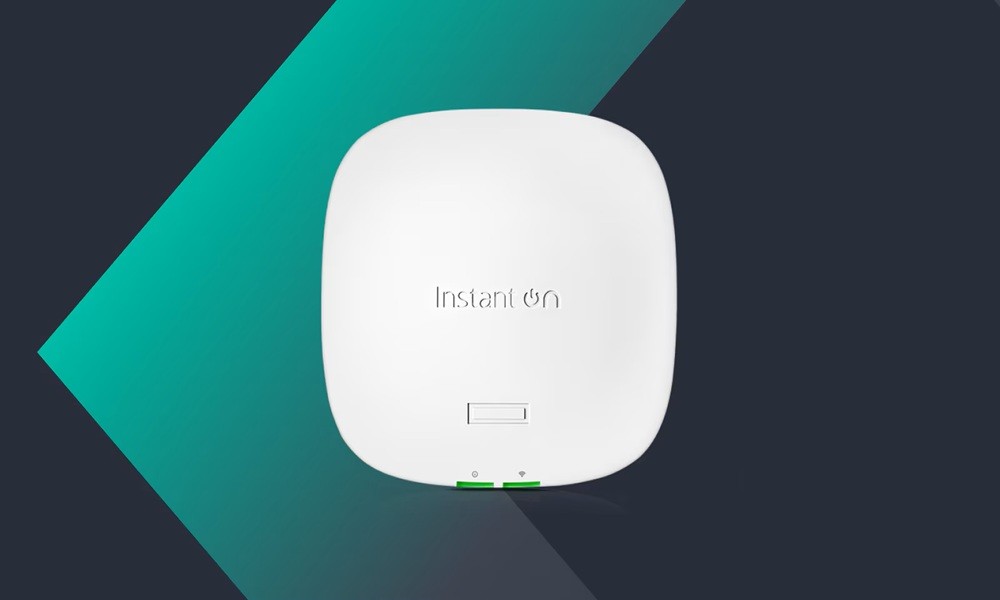

If you are looking for a Wi-Fi access point that is easy to install, highly stable, and capable of supporting small to medium-sized businesses, the HPE Networking Instant On AP21 is a top-tier contender. However, a critical question for business owners and IT managers remains: “Should I deploy it as a standalone unit or set up a Mesh network?” This article will help you decide by comparing both options based on real-world usage scenarios to ensure the highest return on your investment.
Understanding the Fundamentals – Standalone AP vs. Mesh Networking
Before choosing your solution, it is essential to understand the technical distinctions to ensure your network architecture suits your building’s layout.
Standalone AP (Single Access Point): This involves installing a single unit to provide Wi-Fi coverage for an entire area. It is ideal for smaller spaces with open floor plans or few physical obstructions.
Mesh Wi-Fi (Multiple Interconnected APs): This setup uses multiple APs working together as a single unified fabric to extend coverage across every square meter. It effectively eliminates “dead zones” in complex layouts or multi-story buildings without requiring a dedicated ethernet cable for every unit.
5 Secrets Why a Standalone HPE Networking Instant On AP21 Might Be All You Need
Opting for a standalone setup does not mean compromising on performance; rather, it is about “right-sizing” for your specific needs. It is the perfect choice under these conditions:
1. Small to Medium-Sized Spaces
For condominiums, open-plan cafes, or small home offices (approximately 50-100 sq.m.) without thick concrete walls, a single AP21 provides more than enough signal penetration.
2. Moderate User Density
The AP21 supports high-density environments, maintaining stability for 10-30 simultaneous devices-ideal for boutique shops or small professional teams.
3. Seamless and Simple Installation
This setup is the definition of “Plug-and-Play.” It reduces the need for complex cabling and minimizes the time spent on multi-node configurations.
4. Cost-Effective for Startups
For new businesses, a single-point investment saves on upfront hardware costs while still delivering Enterprise-grade Wi-Fi 6 technology.
5. Built-in Enterprise Security
Even as a standalone unit, the AP21 comes with built-in WPA2/WPA3 authentication and automatic security updates. You get full-scale protection against cyber threats without needing extra security appliances or complex configurations.
Dealing with Dead Zones? Why a “Mesh” Configuration is the Ultimate Solution
As your business grows or if your architectural layout is more challenging, transitioning to a Mesh system solves the limitations of a single AP:
Large-Scale or Multi-Story Areas: In 2-3 story commercial buildings or warehouses, a Mesh system seamlessly relays signals between floors, ensuring connectivity follows the user.
Eliminating Dead Zones: If you experience dropped connections in conference rooms or secluded corners, adding more AP21 units in a Mesh configuration fills those gaps with a full-strength signal.
High Concurrent User Loads: When user numbers grow into the dozens or hundreds, a Mesh network provides Load Balancing. It distributes traffic across multiple APs, preventing any single unit from becoming a bottleneck.
Uninterrupted Seamless Roaming: The core benefit of Mesh is the ability to move through the office without losing your connection. The system automatically hands off the device to the strongest node, essential for hotels or offices where mobile communication is constant.
Head-to-Head Comparison: Standalone vs. Mesh for Business Efficiency
Choosing the right deployment model directly impacts long-term operational efficiency. Consider these key factors:
Coverage and Stability
Standalone: Provides peak signal strength near the device, but signal quality degrades with distance and physical barriers.
Mesh: Interconnects multiple APs to create a consistent signal blanket, eradicating dead zones in large or complex structures.
Ease of Management
Standalone: Offers the quickest setup time with zero network planning required.
Mesh: Requires strategic placement of nodes to optimize backhaul signals. However, both models can be easily managed via the HPE Instant On Cloud App.
Scalability and Budget
Standalone: The most budget-friendly entry point for micro-businesses.
Mesh: While requiring a higher initial investment, it offers better long-term scalability. It allows businesses to expand their network footprint as their operations grow.
The Final Verdict: Which One Should You Choose?
Your decision should be based primarily on “Area Size + Usage Intensity”:
If you operate in a home, condo, or small open-plan shop → Choose Standalone.
If you have multiple rooms, several floors, or a vast floor area → Choose Mesh.
Expert Tip: If you are unsure, start with one unit. The HPE Instant On ecosystem is designed to be highly scalable, allowing you to add more AP21 units to form a Mesh network whenever your business demands it.
Choosing the right Wi-Fi system is not a “one-size-fits-all” scenario; it is about aligning technology with your business objectives. Whether you prioritize the simplicity of a standalone unit or the expansive reach of a Mesh network, the HPE Networking Instant On AP21 delivers reliable, secure, and Enterprise-standard Wi-Fi 6 that is manageable right from your smartphone. It is a smart investment that reduces IT overhead and allows you to focus on what matters most: growing your business.
Unsure which deployment model fits your specific infrastructure? Quickserv is Thailand’s leading IT Infrastructure specialist and authorized partner. Beyond providing hardware, our team of expert engineers offers tailored consultation and network design to ensure your investment delivers maximum performance. For a stable, future-proof network that powers your business without interruption, trust the professionals. Choose Quickserv for excellence in service and international-standard IT solutions.