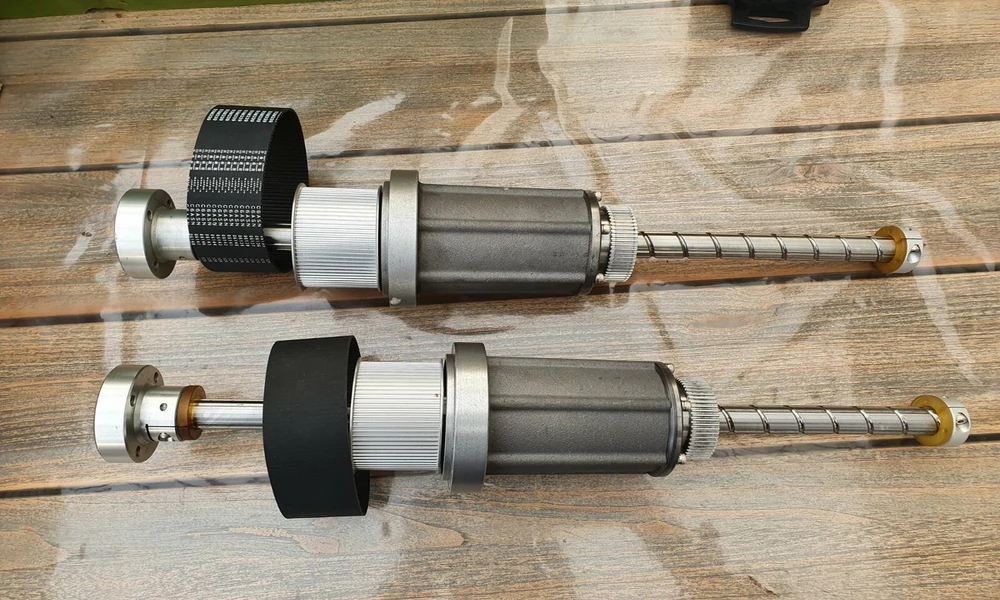

In the world of CNC ting rotary motion into precise linear motion. However, many engineers machinery and automation systems, the ball screw is a critical component responsible for converencounter significant challenges when designing machines that require a long stroke and high speed, as standard ball screws often face limitations regarding shaft vibration and whipping.
This article provides a straightforward comparison between conventional systems and the Ball screw BLR technology. We will explore the pros and cons of each and identify the specific applications where upgrading to a ball screw BLR (บอลสกรู BLR) from THK makes the most engineering and financial sense.
Understanding the Different Working Principles
Before selecting a system, it is vital to understand how driving power is transmitted. Although both options use a screw shaft and a nut to create linear motion, they differ fundamentally in which component is rotated by the motor. This mechanical shift completely changes how the machine handles rotational stress, speed thresholds, and system inertia.
Standard Shaft-Rotation Type
This is the conventional system used in most applications. The motor is connected to the end of the shaft. As the shaft rotates, the nut moves linearly back and forth.
– Advantages: It features a simple structure, is easy to install, and comes at an accessible starting price.
– Limitations: When operating over long distances at high speeds, a long shaft is prone to the whipping effect. This causes unwanted noise and vibration, and ultimately limits the maximum operational speed of the machine.
Ball Screw BLR
This system reverses the standard mechanics. The screw shaft is fixed in place, and the motor rotates the nut instead. As the nut spins, it travels along the stationary shaft, carrying the load with it.
– Advantages: Because the shaft does not rotate, this design effectively minimizes shaft whipping and vibration, even over long distances. It maintains high speeds reliably and significantly reduces the overall inertia of the system.
Spec Comparison: Standard System vs. Ball Screw BLR
To help you make an informed decision, here is a breakdown of the engineering differences between the two systems:
– Shaft Whipping: Standard ball screws have a higher risk of whipping if the shaft is long and rotates rapidly. In contrast, the BLR series drastically reduces this risk because the shaft remains stationary.
– Maximum Speed: The standard model’s speed is restricted by the critical speed of the long shaft. The BLR model can achieve higher operational speeds without being heavily constrained by the shaft’s length.
– Stroke Length: The conventional type is best suited for short to medium strokes, whereas the BLR series is specifically engineered to handle long stroke applications.
– System Inertia: Standard systems have high inertia because energy is required to spin the entire heavy steel shaft. The BLR series offers much lower inertia since only the nut rotates, allowing the motor to accelerate and decelerate with better responsiveness.
– Cost-Effectiveness: Standard ball screws are cost-effective for smaller-scale, shorter-distance operations. For large-scale projects, the BLR series proves to be a better long-term investment as it allows for the downsizing of motor specifications.
Which Applications Benefit Most from the Nut-Rotation (BLR) System?
If your machinery meets any of these three conditions, transitioning to Ball screw BLR technology is a highly logical investment:
1. Long Stroke Applications
For equipment like large laser cutting machines, CNC routers, or industrial transfer systems, utilizing the BLR series allows you to maintain consistent high speeds from start to finish. It actively reduces the chances of shaft sagging and vibration over extended distances.
2. High-Speed & High-Response Requirements
Because rotating just the nut requires significantly less inertia than spinning a long steel shaft, the motor can accelerate and brake with far greater precision. This responsiveness is highly beneficial for reducing cycle times in production lines.
3. Optimizing Motor Specs to Manage Costs
With a standard system, solving the whipping effect often requires increasing the shaft’s diameter to make it stiffer and heavier, which in turn demands a larger, more expensive motor. Because the BLR system keeps the shaft fixed, you can use a smaller diameter shaft and a lower-capacity motor, effectively helping you manage and optimize overall production costs.
While standard ball screws remain a solid choice for basic, short-stroke applications, pushing them to perform in high-speed, long-stroke scenarios can lead to rapid wear and unmet performance expectations. Choosing a nut-rotation technology like the Ball screw BLR is a precise engineering solution that helps prevent system inefficiencies and offers better long-term value.
If you are designing a new machine or looking to upgrade your current linear motion system for optimal performance, consult the engineering team at I.N.B. As an official THK distributor, we are ready to provide expert advice and help you select the exact linear motion specifications needed to keep your production running smoothly and accurately.